What Makes Historic Venues in Los Angeles So Popular?
Historic venues in Los Angeles keep showing up on shortlists for a simple reason: they offer character that a newly built space usually can't fake. Original architecture and worn in textures give events something to build around instead of starting from a blank room, and that sense of place is hard to manufacture in a new building. This piece looks at what actually makes these older buildings so appealing, from the architecture itself to how a space with history changes the way guests experience an event.
1. Architectural Charm and Character Appeal
Older buildings tend to carry details that modern construction rarely bothers to include anymore.
Original Details Worth Preserving
Exposed brick and ornate molding show up constantly in historic venues, along with tall arched windows that builders decades ago simply worked into a space differently than they do now. These details give a room texture that paint and drywall can't replicate. A venue that's kept its original architecture intact usually feels more distinct than a space designed purely for flexibility.
How Restoration Changes a Space Without Erasing It
The best historic venues walk a careful line. They update the wiring and plumbing, and bring in modern climate control, so the space stays comfortable and functional. At the same time, a good restoration keeps the bones of the building recognizable rather than stripping out everything that made it interesting in the first place. Venues that get this balance right tend to hold onto their character for decades.
2. Photo Opportunities in Vintage Settings
Photographers consistently gravitate toward historic venues, and there's a practical reason behind it.
Lighting and Texture in Older Buildings
Older buildings often have taller windows and higher ceilings than modern construction, which lets in more natural light throughout the day. Combined with textured walls or original woodwork, that light creates depth in photos that a plain, evenly lit modern room struggles to match.
Backdrops That Don't Need Extra Decor
A historic room usually already looks finished before a single flower arrangement gets added. That means photographers and planners can spend less time building a backdrop from scratch and more time capturing the actual event. It also means photos tend to hold up well years later, since the architecture doesn't date the way trendy decor eventually does.
3. How History Enhances the Guest Experience
Beyond how a venue looks, there's something about hosting an event in a building with a real past that changes how guests experience it.
A Sense of Place Guests Remember
Guests tend to remember historic venues more clearly than generic event spaces, partly because the building itself gives them something to talk about. Walking into a space that's stood for a century creates a different kind of first impression than walking into a room that could be anywhere. That first impression tends to set the tone for the rest of the evening, whether it's a quiet reception or a full scale celebration.
Stories That Give an Event Context
A venue with a documented history, whether that's a former theater or an old bank building, gives hosts something to weave into the event itself. That context adds a layer most modern venues simply don't have to offer, and it often gives guests something to remember well after the event has ended.
What to Look for in a Historic Venue
Before booking a historic space for your next event, it helps to check a few things that don't always come up on a first tour.
Ask what year the building was constructed and when it was last renovated
Confirm the electrical and AV systems have been updated for modern equipment
Check accessibility, since older buildings sometimes need extra planning here
Ask about noise restrictions tied to the building's age or neighborhood
Find out whether the venue allows structural changes like hanging décor from original fixtures
Request recent event photos to see how the space actually looks in use
Final Thoughts
Historic venues in Los Angeles hold onto their popularity because they offer something a brand new building simply can't recreate. The architecture and the way these spaces photograph both trace back to the same source, and so does the impression they leave on guests: a building with real history behind it.
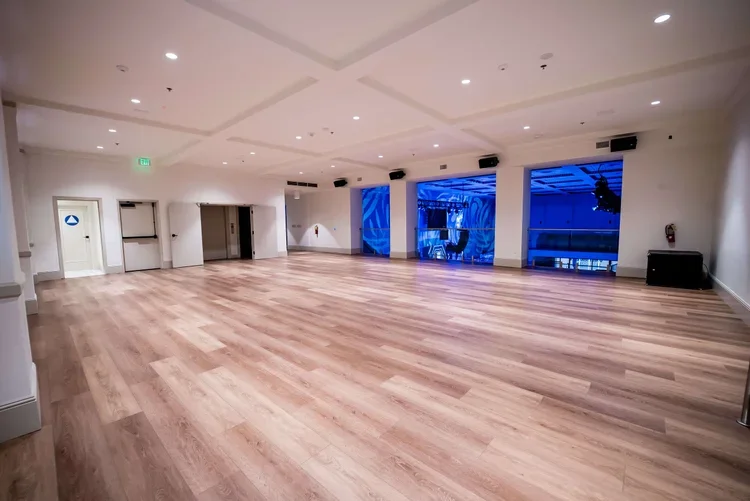
Ovation Square sits inside a building constructed in 1923 in the heart of Downtown Long Beach, remodeled to bring modern amenities into a space that's kept its original character. Take a look at the venue if you're considering a historic setting for your next event.
Frequently Asked Questions
Q. What makes a venue historic?
A. A venue is generally considered historic if the building has stood for several decades and retains meaningful original architecture or design elements. Age alone matters less than whether the character of the original structure has been preserved.
Q. Are historic venues harder to book than modern event spaces?
A. Not necessarily, though popular historic venues in desirable neighborhoods can book up quickly for peak season dates. It's worth reaching out early once you've settled on a venue you like.
Q. Do historic venues have modern amenities like AV and climate control?
A. Most well maintained historic venues have updated these systems during restoration, even while keeping the original architecture visible. Always confirm with the venue directly rather than assuming based on the building's age.
Q. Why do photographers prefer historic venues?
A. Natural light and architectural texture do a lot of the work, since a finished looking backdrop makes historic spaces easier to photograph well without extra styling.
Q. Is a historic venue a good fit for a corporate event, not just weddings?
A. Yes. Many historic venues host everything from product launches to holiday parties, and the character of the space often makes a corporate event feel less generic than a standard hotel ballroom.
